 ultimate-guide
Cost of Clearing Overgrown Land in 2026: Full Guide
Quick Summary
Clearing overgrown land costs depend mostly on vegetation density and type rather than acreage alone, so light brush costs less than mature hardwoods and dead timber. Because published averages vary widely, the article recommends a site walk and at least two written quotes describing the same scope. Asking for per-acre rates by density tier makes bids comparable.
- Brush and saplings cost less to remove than mature hardwoods and dead timber, which need felling and hauling.
- Ask each contractor for a per-acre rate for each density tier, then multiply by the acreage in that tier.
- Request the assumed equipment hours per acre and whether debris handling is included in each bid.
- Check permits, utility locates, and protected trees before clearing, since these can add to the budget.
- Get inclusions and exclusions in writing so quotes can be compared line by line.
Table of Contents
- What Clearing Overgrown Land Typically Costs in 2026
- Land Clearing Cost Per Acre: How Vegetation Density Changes the Price
- Forestry Mulching Cost and When It Beats Traditional Clearing
- Factors That Affect the Cost of Clearing Overgrown Land
- What a Clearing Quote Includes and What It Leaves Out
- Permits, Protected Trees and Utility Restrictions That Add to the Budget
- How Long Land Clearing Takes and How Schedule Affects Cost
- How to Build a Land Clearing Estimate You Can Compare
- Getting an Accurate Quote for Your Overgrown Property
- Frequently Asked Questions
What Clearing Overgrown Land Typically Costs in 2026
Last Updated: October 31, 2026
Clearing overgrown land is one of the more unpredictable projects a property owner can take on, and the cost of clearing overgrown land in 2026 depends far more on what is growing there than on the acreage alone. Two lots of identical size can quote at very different prices, and the reason is often the density and type of vegetation. Brush and saplings cost less to remove than mature hardwoods and dead timber, which need felling, sectioning, and hauling.
Because published averages vary widely by region, equipment, and job scope, we will not put a single number on your project here. A reliable estimate starts with a site walk. Plan on getting at least two written quotes that describe the same scope, so the figures can be compared directly.
Land Clearing Cost Per Acre: How Vegetation Density Changes the Price
Per-acre pricing is a common way contractors quote clearing work, but the rate itself shifts with vegetation density. A flat, lightly brushed acre takes a fraction of the time that a choked, tree-heavy acre does, and the equipment hours scale accordingly. Asking a contractor to state the per-acre rate for each density tier lets you see exactly where the price is coming from.
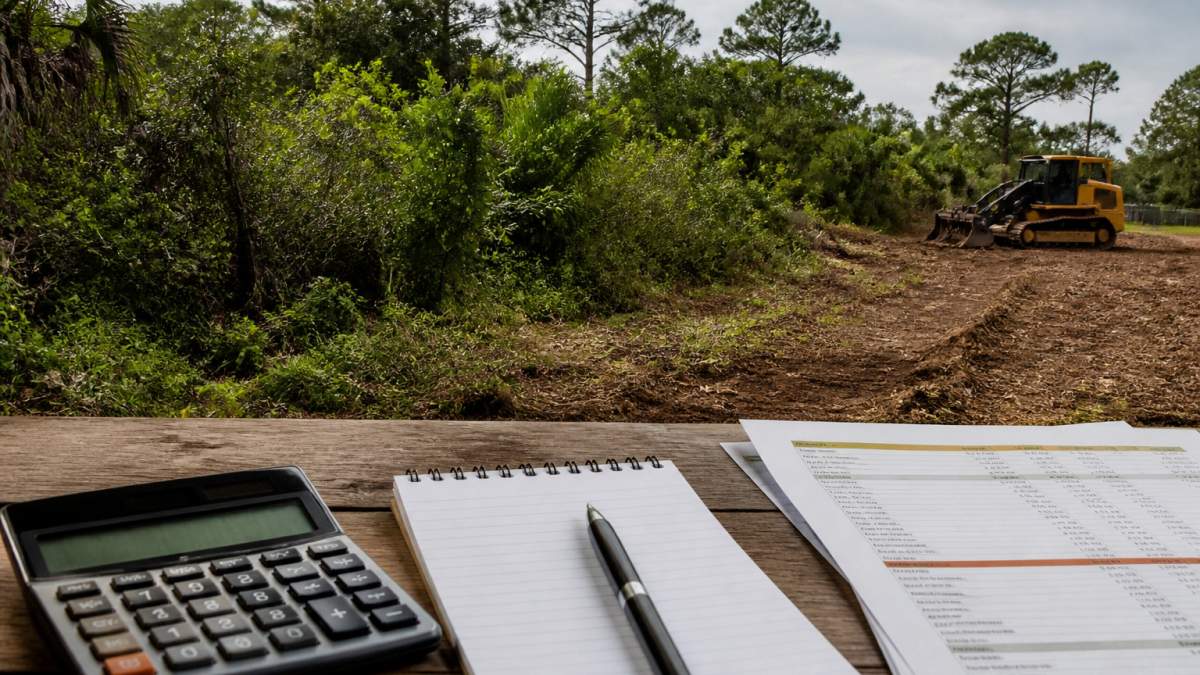
Why a single per-acre average is misleading
Most published "average cost per acre" figures blend very different jobs into one number. A mulched acre of light brush and an acre of mature hardwoods with stumps to grind are not the same product, and quoting them at the same rate hides the labor, equipment, and disposal differences. The practical fix is to ask for a per-acre rate for each density tier on your property, then multiply by the actual acreage in each tier rather than the total parcel size.
Density tiers and what drives the rate
Use the tiers below to describe your land consistently, so every bidder prices the same scope. Rates vary by region, equipment, and access, so treat the tiers as a framework for comparing quotes.
- Light brush and saplings. Weeds, briars, and saplings under roughly 2 inches in diameter. A mulcher may be able to cover this in a single pass, and material may stay on site as mulch.
- Moderate brush with scattered trees. Dense undergrowth mixed with trees in the 2-to-8-inch range. Clearing this tier may take multiple passes, and the larger stems may be mulched or hauled.
- Dense growth and mature trees. Heavy understory with trees over roughly 8 inches in diameter, plus standing dead timber. Large trees may need to be felled, stumps may need to be addressed, and logs may need to be removed.
- Invasive monocultures. Kudzu, bamboo, Chinese privet, and similar growth can regrow after a single pass, so quotes may include follow-up treatment or a second visit. Ask whether the price assumes one clearing pass or a treatment program.
A worked example you can adapt
Suppose a 5-acre parcel breaks down as 2 acres of light brush, 2 acres of moderate brush with scattered trees, and 1 acre of dense growth with mature trees. Instead of asking for one blended per-acre rate, request a line for each tier: 2 acres at the light rate, 2 acres at the moderate rate, and 1 acre at the dense rate, plus separate lines for stump grinding and hauling. When three contractors return that same structure, the differences show up in specific tiers rather than in one opaque total. A common pattern is that bids converge on light brush and diverge sharply on the dense acre, which is exactly where you want to ask follow-up questions.
Per-square-foot and per-hour cross-checks
Some contractors quote by the square foot, especially on smaller lots or right-of-way work. One acre is 43,560 square feet, so a per-square-foot rate multiplied by that figure gives a per-acre equivalent you can compare against tier pricing. Equipment rates are the other cross-check: a forestry mulcher, dozer, or excavator is typically billed by the hour or by the day, and the per-acre price is really the equipment rate multiplied by the hours the contractor expects the job to take. Ask for the assumed hours per acre in each tier. If one bid assumes far fewer hours than the others on dense ground, that is a signal to scrutinize the scope, not a bargain.
Light brush and small trees
Light brush, weeds, and saplings are the least expensive clearing scenario. Crews can often run a mulcher across the ground in a single pass, and little material needs to be hauled away. Confirm whether the quoted rate includes debris handling, since leaving mulch on site and removing it are priced differently.
Dense growth, mature trees and dead timber
Dense growth with mature trees and standing dead timber raises both labor and risk. Large trees may need to be cut and removed in sections, and dead wood can be unstable to work around. Expect a larger share of the budget to go toward tree removal, stump handling, and disposal. Ask the contractor to separate these line items so you can see which part of the job is driving the total.
The article breaks vegetation into density tiers, and each tier is priced differently.
| Density tier | What it includes | Pricing note |
|---|---|---|
| Light brush and saplings | Weeds, briars, saplings under about 2 inches | Often one mulcher pass; may stay on site |
| Moderate brush with scattered trees | Undergrowth with trees 2 to 8 inches | May take multiple passes |
| Dense growth and mature trees | Trees over about 8 inches, standing dead timber | Higher labor, stump handling and disposal |
| Invasive monocultures | Kudzu, bamboo, Chinese privet | May regrow; follow-up treatment may be needed |
Forestry Mulching Cost and When It Beats Traditional Clearing
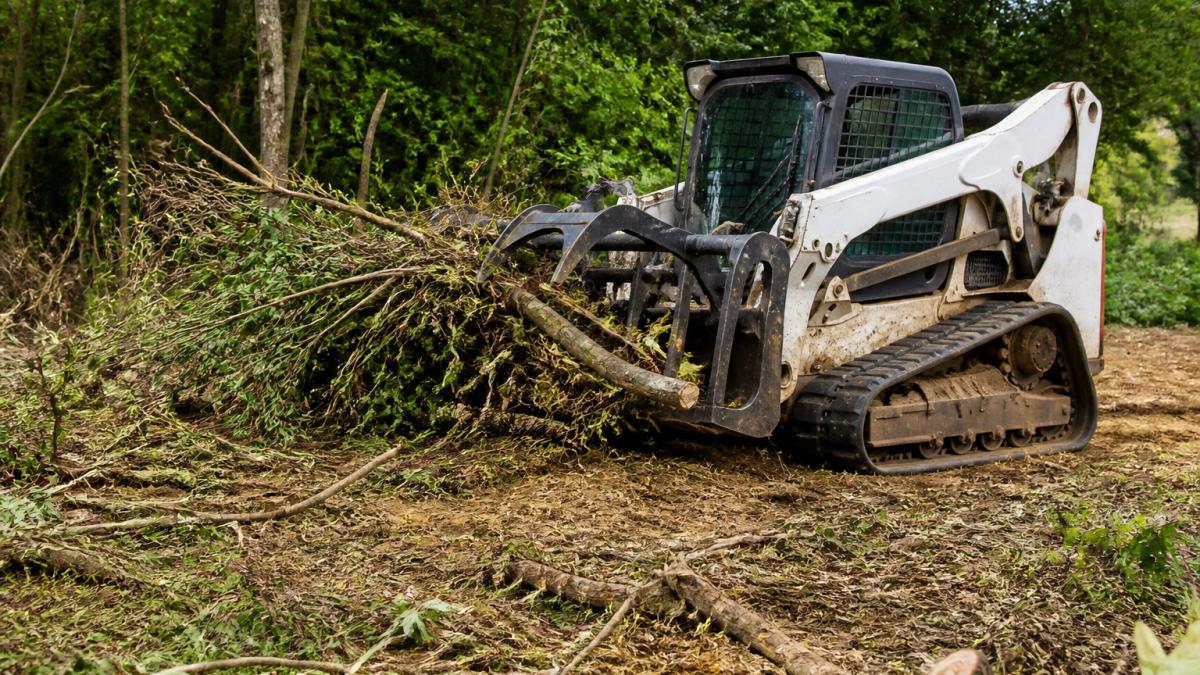
Forestry mulching uses a specialized machine to grind vegetation into mulch on site. Because it reduces the hauling that traditional clearing can require, it may suit some properties with a lot of undergrowth, though suitability depends on the site. To see the specific advantages it offers for Winter Haven-area land, read Forestry Mulching Benefits For Winter Haven FL Properties.
Traditional clearing, which removes material from the site, can make more sense when you want usable lumber, when the ground needs grading afterward, or when large trees must come out entirely. For a side-by-side look at both methods on a Clermont-area property, see Forestry Mulching Vs Traditional Land Clearing In Clermont FL. Mulching also leaves a layer of organic material that some owners prefer and others do not. Ask each contractor which method they recommend for your acreage and why, and whether their quote assumes mulch left in place or hauled off. Larger trees that fall outside a clearing scope are handled by our tree removal services.
Factors That Affect the Cost of Clearing Overgrown Land
Several variables push the price up or down, and most of them are visible during a site walk. Terrain is a major one. Steep slopes, wet ground, and soft soil limit which equipment can work safely and slow production. Accessibility matters too: a gated lot reachable only by a narrow trail costs more to mobilize equipment onto than one with a clear road.
Other factors include the total acreage, the vegetation mix, and how much of the material must be removed versus left on site. Proximity to structures, power lines, and fences adds careful work that slows the crew. Finally, the schedule and season can affect pricing, because contractors may be booked heavily during dry periods after storm cleanup.
What a Clearing Quote Includes and What It Leaves Out
A complete clearing quote should state the scope in plain terms: the acreage covered, the vegetation method, and whether stumps are removed or ground down. It should also say whether debris is mulched in place, chipped, or hauled, and whether the disposal site fee is included. Many budget surprises come from line items that were simply missing from the first estimate.
The fastest way to compare bids is to check each one against the same list of line items. Below is the checklist we use when reviewing a quote, split into what should be included and what is commonly left out.
Line items a complete quote should address
- Acreage and density by area. The total acreage plus how much falls into each density tier, so the price ties back to the land.
- Clearing method. Forestry mulching, dozer and excavator work, hand cutting, or a mix, and which machine is assumed for each area.
- Tree removal. Whether trees over a stated diameter are felled, sectioned, and removed, and the diameter threshold used.
- Stump handling. Whether stumps are ground, pulled, or left, and to what depth grinding goes.
- Debris disposal. Whether material is mulched in place, chipped, burned where permitted, or hauled, and who pays the disposal site fee.
- Mobilization. The cost to bring equipment to the site, including any lowboy transport or equipment staging.
- Access work. Whether the quote includes clearing a lane for equipment or repairing a driveway or gate after the work.
- Protection of retained features. Fencing, tree protection, or matting around structures, wells, septic fields, and trees you want kept.
- Cleanup standard. Whether the site is left with mulch spread, piles staged, or fully raked, and what "clean" means in the contract.
- Timeline and payment schedule. Start date, expected duration, weather contingencies, and deposit and progress payment terms.
What quotes commonly leave out
- Permit fees and application time. Tree removal or land disturbance permits, when required, are often billed separately or handled by the owner.
- Utility locate and protection. Utility locate services are typically required before digging or grinding stumps, and protecting or working around lines can add cost.
- Grading and seeding. Restoring grade, spreading topsoil, and seeding or sodding after clearing is usually a separate scope.
- Erosion control. Silt fence, straw wattles, and stabilization measures may be required and are frequently excluded.
- Haul-away of large logs. Some quotes mulch brush but exclude merchantable logs or oversized trunks.
- Stump grindings. The spoil from grinding has to go somewhere; removal is often an add-on.
- Rock and unexpected ground conditions. Buried debris, rock, or soft ground that slows equipment is commonly handled by change order.
- Follow-up treatment for invasive growth. A second pass or herbicide program is usually priced separately.
Questions that expose a thin quote
Ask each bidder: What is the stump diameter threshold? Is the disposal site fee included? How many equipment hours per acre are assumed? Who pulls the permit? What happens if we hit buried debris or rock? Is the site left mulched, piled, or bare? What is the payment schedule, and is there a deposit? The answers turn a one-line estimate into a scope you can compare line by line against every other bid.
Getting inclusions and exclusions in writing
Ask the contractor to list inclusions and exclusions in the written proposal, not just in conversation. A quote that names what it excludes is usually more trustworthy than one that promises an all-in price with no detail. Keep the signed scope with the contract, and reference it if a change order comes up mid-project.
Permits, Protected Trees and Utility Restrictions That Add to the Budget
Before any clearing begins, check whether your county or municipality requires a permit for tree removal or land disturbance. Requirements vary by jurisdiction and can depend on tree size, zoning, or proximity to wetlands and waterways. Check with your local authority. Some areas also protect specific species or heritage trees, which can limit what you are allowed to remove regardless of your plans.
Utility easements and buried lines are another cost driver. Crews must avoid overhead power lines and underground service, and utility locate services are typically required before digging or grinding stumps. Build these checks into your planning schedule. Environmental restrictions, such as buffers around streams or wetlands, may also limit how much of the property can be cleared at all.
How Long Land Clearing Takes and How Schedule Affects Cost
Duration depends on acreage, density, terrain, and equipment. A lightly brushed area can sometimes be mulched in a few days, while a heavily wooded parcel may take several weeks, especially if large trees must be felled and hauled. Weather is a constant variable; rain can halt work for days and soft ground can slow equipment considerably.
Schedule also affects price. Contractors who can work on flexible timing sometimes offer better rates than those who must fit you into a crowded calendar. Ask for a projected timeline with a realistic buffer, and clarify whether the quote assumes continuous work or multiple mobilizations, since each return trip adds cost.
How to Build a Land Clearing Estimate You Can Compare
Start by measuring or confirming the acreage and sketching the areas that need clearing, noting any structures, fences, and access points. Next, rate the vegetation on a simple scale: light, moderate, or dense, with a count of mature trees and any dead timber. Photograph the property from several angles so contractors can quote from the same picture you have.
Once you have this information, request quotes that use the same assumptions. Ask each bidder for the per-acre rate, the cost to remove or mulch material, stump handling, permit and locate fees, and any mobilization charges. Placing the quotes side by side in a simple table makes gaps and outliers easy to spot.
Getting an Accurate Quote for Your Overgrown Property
The most accurate quote comes from an in-person site assessment, not an estimate based on a phone description. An in-person walk of the property allows density, terrain, and access to be judged in a way that photos alone cannot. Be ready to point out boundaries, utility lines, protected areas, and anything you want preserved.
For pricing that matches your specific property, contact Redbird Tree Service to schedule an assessment. Request a written scope with inclusions and exclusions so you can compare it against other bids. You can also review exactly what our land clearing services cover before requesting a quote.
Frequently Asked Questions
How much does it cost to clear overgrown land?
Clearing overgrown land usually costs more per acre than clearing open ground, because the price depends on brush density, tree size and how much material must be hauled away. Lightly overgrown acreage with small brush typically prices lower than acreage with mature trees and dead timber. Quotes are often given per acre or per hour of equipment time. Ask each contractor to state whether the price includes stump removal, debris hauling and disposal, since those items can change the total significantly. Pricing depends on the specifics of your property, so request a site-specific quote from a contractor.
Is forestry mulching cheaper than traditional land clearing?
Forestry mulching is often cheaper when the goal is to clear brush and small trees and leave the material on site as mulch. Because the mulcher grinds vegetation in place, there is little or no hauling and no separate debris disposal, which removes two of the largest costs in traditional clearing. Traditional clearing can be the better choice when you need stumps removed, the ground graded, or large logs taken off the property. Compare quotes for both methods on the same acreage to see which fits your project.
How long does it take to clear 10 acres of land?
The time to clear 10 acres depends on vegetation density, terrain, equipment and whether debris must be hauled. Lightly brushy land can often be cleared in a small number of working days with a mulcher, while heavily wooded or wet acreage takes considerably longer. Weather and access also affect the schedule. Ask the contractor for a timeline in the estimate, since a longer schedule usually means more equipment and labor hours and a higher total cost.
How can I get an accurate land clearing estimate?
An accurate estimate starts with a site visit rather than a phone quote. Walk the property with the contractor, point out boundaries, low spots, wet ground, utility lines and any trees you want to keep. Ask for the price per acre and the total, and confirm what is included: stump work, hauling, disposal, and cleanup. Get at least two or three written quotes built on the same scope so you can compare them directly.
What factors affect the cost of clearing land?
The main factors are acreage, vegetation density, tree size and species, terrain and slope, soil and ground moisture, access for equipment, and the disposal method. Dead trees and hazard trees can add time because they require careful handling. Protected trees, utility lines and environmental restrictions can also change the scope. Each factor should appear as a line item or assumption in your quote so you can see what drives the total.
Does land clearing include removing stumps and debris?
Not always. Some clearing quotes cover only cutting and mulching brush, while others include stump grinding, hauling of logs and debris, and final cleanup. Read the scope in each quote carefully and ask directly whether stump removal, debris disposal and site cleanup are included or billed separately. Leaving these items out of the comparison is one of the most common reasons two estimates appear to differ by a large amount.