 ultimate-guide
Tree Service for Absentee Property Owners: Complete Guide
Last Updated: October 29, 2026
Quick Summary
Tree service for absentee property owners focuses on catching hazards early, since owners who live far away cannot walk the grounds after storms or spot leaning limbs. Owners can have neighbors or caretakers photograph trees from the ground, then hire insured, verified providers with written scopes and documented payment terms.
- Ask a neighbor or caretaker to photograph trees from several angles and send the images to you.
- Verify the company's license number through the issuing agency's public lookup before hiring.
- Request a certificate of insurance sent directly from the company's insurance agent.
- Require a written scope of work naming each tree, the work, and cleanup.
- Avoid paying in full upfront; use a deposit and pay on completion against the signed scope.
Table of Contents
- Why Absentee Owners Face Unique Tree Risks
- Identifying Dead, Dying, and Hazardous Trees From Afar
- Questions to Ask a Tree Service Before You Hire
- Tree Service Estimate Checklist: What a Fair Quote Includes
- Verifying Tree Service Proof of Insurance and Certification
- Managing Remote Coordination, Photo Documentation, and Payments
- Wildfire Risk, Defensible Space, and Permit Requirements
- Remote Property Maintenance Checklist and Seasonal Calendar
- Scheduling Your First Visit and Next Steps With Redbird Tree Service
- Frequently Asked Questions
Why Absentee Owners Face Unique Tree Risks
Tree service for absentee property owners is less about the cutting itself and more about catching problems before they become emergencies. Owners who live hundreds of miles away cannot walk the property after a storm, notice a leaning limb, or hear a branch crack in the wind. That gap in observation is where most avoidable damage starts.
Trees grow whether anyone is watching or not. A limb that overhangs a roof, a canopy that drops fruit onto a driveway, or a trunk with early decay can go unnoticed for seasons. Many absentee owners only learn about the problem when a neighbor calls or an insurance adjuster arrives.
Vacancy compounds the risk. An empty house gives little warning that a tree has begun to fail, and no one is present to clear debris or report it.
Identifying Dead, Dying, and Hazardous Trees From Afar
You do not need to climb a tree to spot most warning signs. Ask a trusted neighbor, property manager, or caretaker to photograph the trees from the ground and send the images to you. Dead branches with no leaves in the growing season, bark that has peeled away in large sections, and fungal growth at the base of the trunk all suggest trouble.
Pay attention to changes in shape as well. A tree that has begun leaning more than before, or a root plate that has lifted near the soil, often signals instability. Cracks, cavities, and branches that split at a fork are also worth flagging.
Photos taken from several angles give a tree service enough information to triage the work before a visit.
Questions to Ask a Tree Service Before You Hire
When you cannot stand in the driveway and watch the crew work, the hiring conversation has to do the job your eyes would normally do. Treat it as a vetting process, not a get-to-know-you call. The goal is to confirm licensing, insurance, scope, communication, and payment terms in writing before anyone touches a tree.
Start with credentials and verification. Ask for the company's state or local business license number and verify it through the issuing agency's public lookup. Review the company's tree removal services to confirm the work matches your property's situation. Ask whether the lead arborist holds a professional arboriculture credential and confirm it independently.
Confirm insurance the right way. Request a certificate of insurance sent directly from the company's insurance agent, not a phone photo of a certificate, and check three things: general liability coverage, workers' compensation coverage, and that the certificate lists the correct legal business name. If a crew member is injured on your property and the company carries no workers' compensation, your homeowner policy can become the backstop. Ask the agent to confirm the policy is current as of the scheduled work date.
Demand a written scope of work. The scope should name each tree by species and approximate size, state the work (remove, prune, cable, stump grind), specify cleanup and hauling, and note any protection for lawns, driveways, and structures. Vague line items such as "tree work" make bids impossible to compare and disputes impossible to resolve from a distance.
Ask who is actually on site. Confirm whether the crew is employed directly or subcontracted, who the lead climber or arborist will be, and whether that person is the same one who wrote the estimate. A common pattern is a sales arborist who quotes the job and a different crew that performs it, fine, but you should know in advance.
Settle communication and approval rules. Agree on one point of contact, the channel for updates (text, email, or a portal), and what triggers a phone call versus a photo update. Ask what happens if the crew finds a hazard the estimate did not cover: who authorizes the added work, and at what dollar threshold does the company stop and wait for your approval?
Lock down payment terms. Avoid full payment upfront. A common structure is a deposit followed by payment on completion, with the final invoice matched line-by-line to the signed scope. Use traceable payment methods, check or card, and never wire money to an account you have not verified by calling the company's published number. Ask for a lien waiver or paid-in-full receipt at closing.
Require documentation. Before-and-after photos, a written completion report, and a copy of the invoice should be standard. Ask how long the company retains job records and whether they will send you copies for your insurance file.
Tree Service Estimate Checklist: What a Fair Quote Includes
A fair estimate spells out exactly what the price covers. Look for the number of trees affected, the species and approximate size of each, and the specific work planned, whether that is removal, trimming, or stump treatment. Vague line items such as "tree work" make it hard to compare bids.
The quote should also list cleanup, debris removal, and disposal. Many owners discover later that hauling or chipping was billed as an extra charge. Confirm whether the price includes protection for lawns, driveways, and nearby structures.
Pricing depends on the size and condition of each tree, access to the site, and the scope of work. Contact Redbird Tree Service for a written quote on your property.
Verifying Tree Service Proof of Insurance and Certification
Before work begins, request a certificate of insurance that names your property and lists both general liability and workers' compensation coverage. Without workers' compensation, an injured crew member could file a claim against your property. Ask the company to send the certificate directly from their insurance agent rather than relying on a photo or copy.
Certification is another useful check. Many tree care professionals hold credentials from the International Society of Arboriculture, and you can verify an arborist's status through that organization's public directory. Ask which certifications the lead arborist holds and confirm them independently.
Keep copies of insurance certificates and credentials on file. Property managers and insurers often ask for them after a storm or accident, and having them ready prevents delays.
Managing Remote Coordination, Photo Documentation, and Payments
Remote oversight works best when you treat it as a repeatable workflow rather than a series of one-off calls, with a written record at every stage: request, quote, authorization, progress, completion, and payment.
Stage 1, Request the assessment. Send the company your property address, a set of recent dated photos from several angles, and a short list of concerns (a leaning oak near the roofline, brush against the fence, a dead pine by the driveway).
Stage 2, Review the quote. Compare bids on the same scope, not on headline price. Check that each quote names the trees, the work, cleanup, hauling, and any stump treatment. Ask whether the price includes permit handling if your jurisdiction requires one, and whether emergency or after-hours work carries a surcharge.
Stage 3, Authorize the work in writing. Reply by email or through the company's portal with a clear approval: the scope you accept, the price, the scheduled date, and the name of the person authorized to approve changes on site. If a property manager or neighbor will be the on-site contact, name them and set a dollar threshold above which they must call you.
Stage 4, Set progress updates. Agree in advance on what you will receive: a photo at arrival, a photo at mid-job for larger removals, and a photo of the cleaned site at completion. For multi-day work, a short end-of-day text with one photo is usually enough. Ask the crew to flag anything that changes the scope before doing the work, not after.
Stage 5, Verify completion. Compare the completion photos against the original scope. Confirm that debris is hauled, the stump is treated or ground as specified, and the lawn and driveway are clear. If something is missing, raise it before final payment.
Stage 6, Pay against the record. Match the final invoice to the signed scope and the completion photos. Keep the invoice, the estimate, the signed authorization, and the photo log together in one folder. Use traceable payment methods and get a paid-in-full receipt.
Documentation that supports insurance and liability. Keep dated photos before and after every visit, the written assessment, the signed scope, the invoice, and any permit approvals. If a limb later damages a roof or a neighbor's fence, that file demonstrates you inspected the property, identified hazards, and had work performed by an insured provider, the kind of reasonable-care record insurers and adjusters ask for. Prompt mitigation of a hazard you knew about also matters: if an assessment flagged a dead tree and you delayed removal for a year, the record cuts against you. Store everything in a shared folder or property management portal so it is available when you are not.

The six stages of remote oversight, from request to payment, each leave a written record:
| Stage | What to do | Record to keep |
|---|---|---|
| Request the assessment | Send address, dated photos and concerns | Written assessment of each tree |
| Review the quote | Compare bids on the same scope | Itemized quote with cleanup and hauling |
| Authorize the work in writing | Approve scope, price and date by email or portal | Signed authorization |
| Set progress updates | Agree on arrival, mid-job and completion photos | Dated progress photos |
| Verify completion | Compare completion photos to the original scope | Completion check against scope |
| Pay against the record | Match invoice to signed scope and photos | Paid-in-full receipt |
Wildfire Risk, Defensible Space, and Permit Requirements
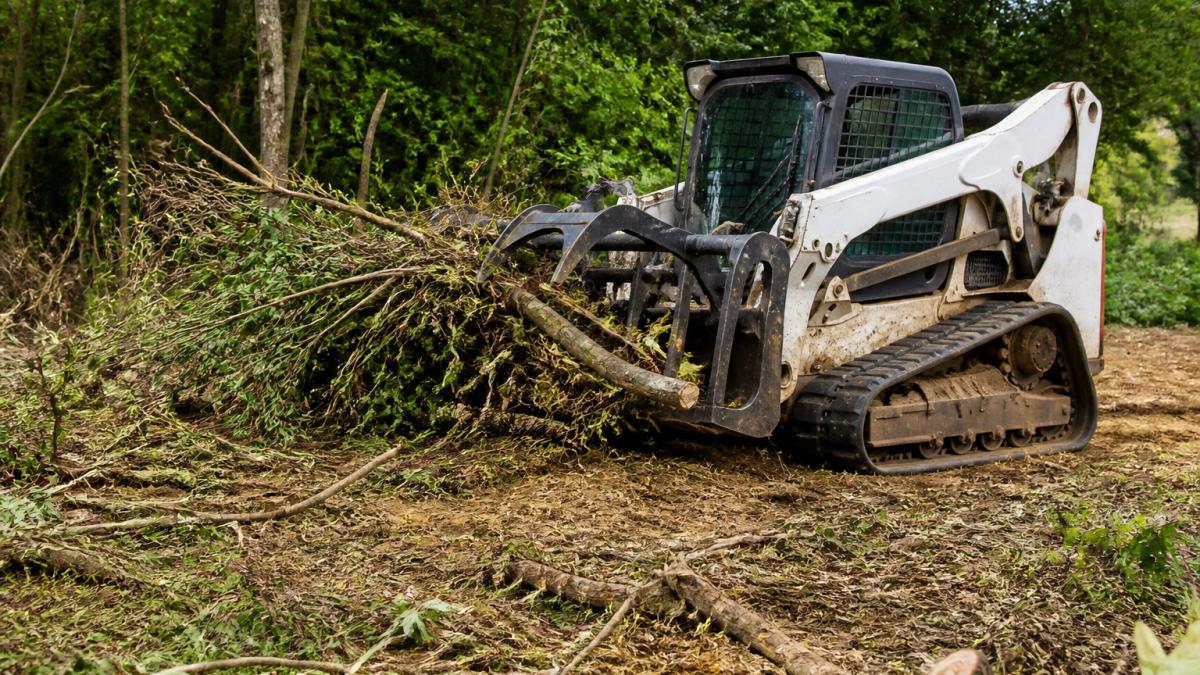
Wildfire risk is a serious consideration for absentee owners in dry or wooded areas. Defensible space refers to the cleared buffer of vegetation around a structure that slows the spread of fire and gives firefighters room to work. Removing dead brush, limbing trees up from the ground, and keeping branches away from roofs are common steps. Explore forestry mulching services for reducing brush and fuel near structures.
Permit requirements vary by county and municipality. Check with your local planning or code enforcement office before cutting large trees or clearing a significant area.
A knowledgeable tree service will identify which permits apply and whether the work requires a licensed or certified professional. Ask for that confirmation in writing.
Remote Property Maintenance Checklist and Seasonal Calendar
A maintenance plan turns one-time repairs into steady protection. Schedule an inspection each spring to assess winter damage, then another in late summer to address storm risk. A fall walk-through before the leaf drop helps identify limbs that need attention before winter weather arrives. You can book tree trimming services timed to each season.
Use this checklist as a starting point:
- Photograph all trees from ground level each season
- Note any dead branches, cracks, or leaning trunks
- Confirm insurance and certification certificates are current
- Review the scope of work from the previous visit
- Verify permit requirements before scheduling large work
- Check that gutters and roof edges are clear of overhanging limbs
- Record all invoices and documentation in one shared location
Pruning timing also matters. Many trees respond best to dormant-season pruning, but dead or hazardous limbs should be addressed promptly regardless of season. Ask your provider to recommend a calendar tailored to your species and region.
Scheduling Your First Visit and Next Steps With Redbird Tree Service
Begin with a clear picture of your property. Gather recent photos, note any known problem trees, and list your priorities, whether that is storm readiness, wildfire clearance, or routine maintenance. This preparation makes the first consultation more productive and helps you compare estimates accurately.
When you are ready, reach out to Redbird Tree Service to request a site assessment and written estimate. Redbird Tree Service offers 24/7 emergency tree services if a tree threatens your home while you are away. Learn more about emergency tree services for urgent storm or fall-risk situations.
Frequently Asked Questions
What should a tree service estimate include?
A written estimate should list each tree or area covered, the specific work (removal, pruning, stump grinding, or clearing), cleanup and debris hauling, equipment and crew details, and whether permits or traffic control are included. It should also state the payment schedule and any conditions that could change the price. Ask for photos of each tree and a clear explanation of why each recommendation is needed. Pricing depends on tree size, access, and scope, so request a quote for your specific property rather than relying on general figures.
How can I verify that a tree service is insured and qualified?
Request a certificate of insurance showing general liability and workers' compensation coverage, and confirm directly with the insurer that the policy is active. Ask whether the lead arborist holds a current certification from the International Society of Arboriculture, and verify it through the ISA directory. Ask for references and check that the company name on the certificate matches the company you are hiring. Your property manager should receive a copy before any work begins.
How can I get a tree inspected or removed if I can't be there?
Many absentee owners authorize a property manager, trusted neighbor, or family member to meet the crew and approve the scope on site. Ask the tree service to send time-stamped photos before, during, and after the work, along with a written summary. Confirm who has the authority to approve additional work and set a spending limit in writing. Arrange key access and a reliable contact number in advance so the crew can reach someone during the job.
What should absentee property owners look for when hiring a tree service?
Look for a company that offers a written estimate with clear scope, proof of insurance and certification, and a documented process for remote communication. A good provider explains why a tree should be pruned rather than removed and shows evidence such as decay, cracks, or structural defects. Confirm how cleanup is handled, how payment works, and how emergencies are reached after hours. Avoid anyone who requires full payment upfront or pressures you to decide immediately.
What is the difference between tree trimming and tree removal for a hazardous tree?
Trimming removes selected branches to reduce risk, improve structure, or clear space, and it is appropriate when a tree is healthy but has specific weak limbs. Removal is the right choice when a tree is dead, severely diseased, heavily decayed, or leaning in a way that cannot be corrected. An arborist can usually tell the difference through a structural inspection. If you are unsure, ask for a written assessment explaining the reasoning.
Who is responsible for a leaning or fallen tree that crosses a property line?
Responsibility depends on local law, the tree's location, and whether the tree was reasonably maintained. Check your county's rules and consult a local attorney if a neighbor dispute arises. Document the condition of the tree with dated photos and keep records of any notices sent. Your insurer can also advise on coverage for damage caused by a neighboring tree.
Managing a property from a distance is manageable with the right partner, clear documentation, and a regular maintenance plan. Contact Redbird Tree Service to schedule your first assessment and get a written plan for your property.