 ultimate-guide
Emergency Tree Removal After Hurricane: Safety, Costs, and Claims
Last Updated: October 26, 2026
Quick Summary
Emergency tree removal after a hurricane is performed by trained crews, and homeowners should first keep everyone a safe distance from damaged trees and power lines. Stay indoors until authorities say it is safe, photograph the damage from a distance, and call 911 for injuries or gas odor. Keep people and pets away from downed lines and leaning trunks until a professional assesses the site.
- Stay indoors until the storm has fully passed and local authorities say it is safe.
- Treat every downed line as energized and keep people and pets at least 35 feet away.
- Never use a chainsaw on a storm-damaged tree; leave all cutting to trained crews.
- Photograph the damage from a safe distance with timestamps intact before anything is moved.
- Get the scope and price in writing before emergency work starts.
Table of Contents
- Immediate Safety Steps Before Crews Arrive
- Signs a Storm-Damaged Tree Is Dangerous
- Hurricane Triage: Deciding What to Remove, Prune, or Monitor
- Emergency Tree Removal Cost and Billing Transparency
- Does Homeowners Insurance Cover Tree Removal?
- How to Document Tree Damage for an Insurance Claim
- Permits, Utility Coordination, and Who to Call
- Choosing and Verifying a Qualified Tree Contractor
- Booking Your Emergency Assessment With Redbird Tree Service
- Frequently Asked Questions
Immediate Safety Steps Before Crews Arrive
Hurricane damage turns a familiar yard into a hazard zone within minutes, and the first hours after the wind stops matter more than the days that follow. Emergency tree removal is a job for trained crews, but your actions before they arrive can help keep your household safe.
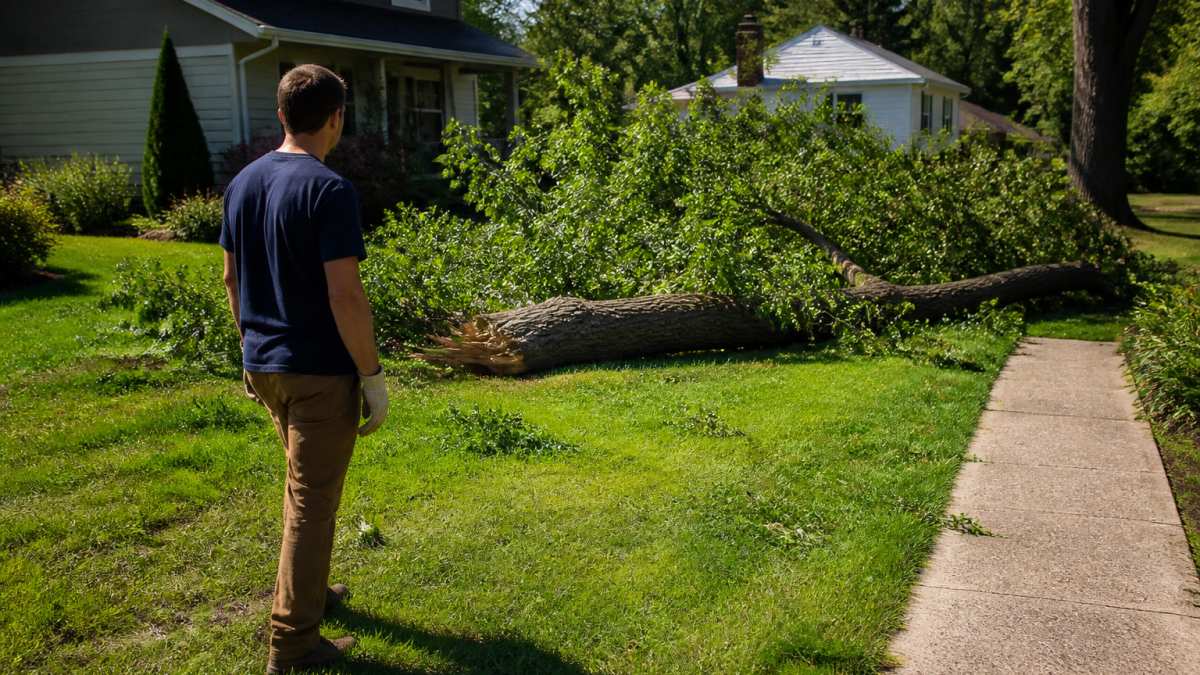
Start by staying indoors until the storm has fully passed and local authorities have said it is safe to go out. Wind can return in the back half of a storm, and broken limbs are often still tangled overhead. Once you do step outside, look before you move: check the path you plan to walk and the canopy above you for cracked trunks, hanging branches, and split crotches.
A Pre-Arrival Checklist You Can Run in Ten Minutes
Work through these steps in order. Stop at any step that puts you near a line, a leaning trunk, or a structure that is visibly shifting.
- Account for everyone. Confirm people and pets are out of the damaged zone and that no one is unaccounted for. If anyone is missing or injured, call 911 before anything else.
- Shut off utilities only if you smell gas or see water entering the walls. Know where your gas meter and main water valve are before storm season. Do not enter a flooded basement or crawlspace to reach a panel.
- Photograph from a safe distance. Stand back and shoot wide views and close-ups with timestamps intact. These images document the damage.
- Mark the perimeter. Use cones, caution tape, or even patio furniture to keep family, neighbors, and pets at least a tree-height away from any leaning or partially uprooted tree. Root plates can shift without warning.
- Clear only what you can lift by hand. Move small branches off walkways if it is safe to do so, but never cut, pull, or stand on a trunk, limb, or root plate that is under tension or in contact with a line.
- Stage access for the crew. If it is safe, move vehicles out of the driveway and unlock gates so the crew can reach the work zone without delay.
Keeping Clear of Downed Power Lines
Treat every line on the ground or hanging from a pole as energized. A downed line can remain live even when the power seems off, and water and debris make the danger worse. Keep yourself, children, and pets at least 35 feet away and call your utility company and 911 immediately. Do not touch a vehicle or tree that is in contact with a line, because the current can travel through it. The utility, not a tree crew, is responsible for de-energizing lines, so any tree work near them must wait for their clearance.
If a line is down across a road, driveway, or fence, call the utility first and 911 second if the line is sparking, smoking, or blocking emergency access. Do not attempt to move the line with a broom, board, or vehicle. If a person or pet is in contact with a line, do not touch them, call 911 and keep everyone else back.
What to Do If a Tree Has Fallen on Your House
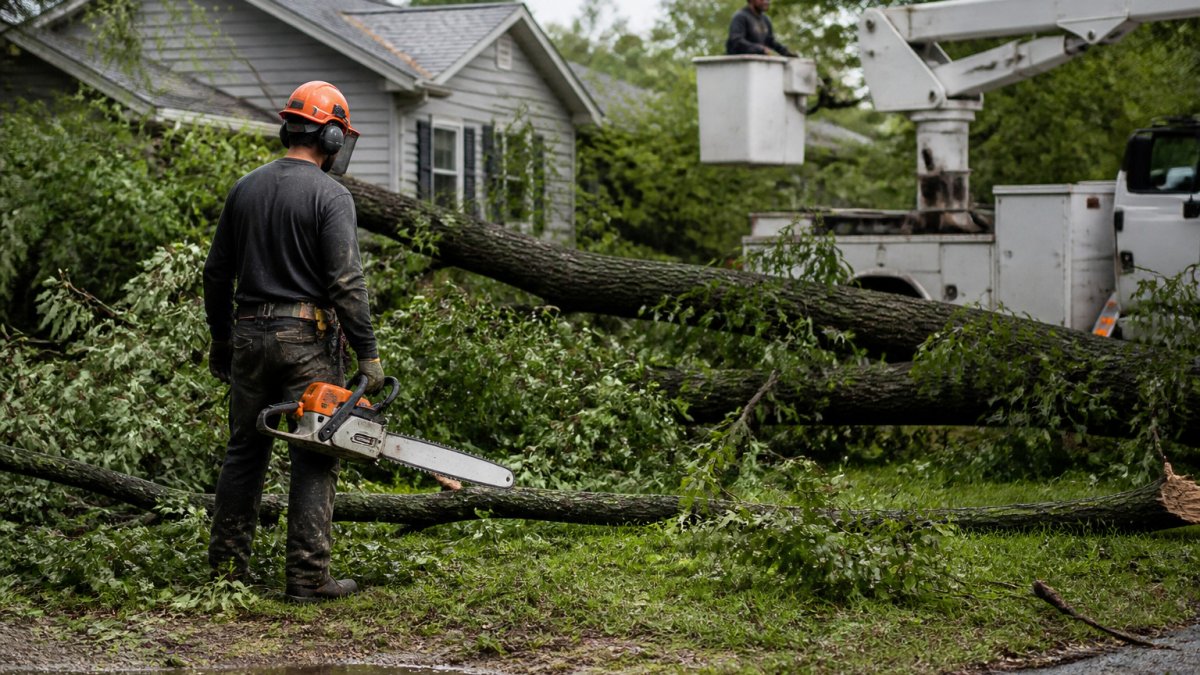
If a tree has come down on your roof, leave the structure first if there is any sign of structural shifting, gas odor, or water entering the walls. For guidance specific to a fallen tree on a home or driveway in Haines City, see local fallen tree guidance. Move everyone to a safe location and call 911 for injuries or fire risk, then contact your insurer to report the damage. Avoid climbing onto the roof or pulling on the trunk, since an unsupported limb can shift without warning. Photograph the damage from the ground before anything is moved, because those images will matter for your claim later.
If the tree is resting on the roof but the structure looks sound, do not try to remove it yourself. A limb under load can release violently when cut, and the roof may be carrying more weight than it appears to. Keep people out from under the overhang and wait for a crew to assess it.
While You Wait: What to Have Ready
Have your address, a callback number, and a short description of the hazard ready when you call. Note whether the tree is on a structure, blocking access, or near a line. If you have already photographed the damage, mention it. Keep children and pets indoors and away from windows on the damaged side of the house until the crew has assessed the site.
Signs a Storm-Damaged Tree Is Dangerous
Not every damaged tree needs to come down, but some warning signs mean it should be assessed urgently. A common mistake is assuming a tree that is still standing is stable. Many failures happen weeks after a storm, when saturated soil lets the root plate give way under ordinary wind.
Look for these red flags:
- A trunk that leans noticeably more than it did before the storm, especially with soil lifting at the base
- Cracks, splits, or bark peeling away from the trunk or a main union
- Large cavities or fungal growth at the base, which can signal internal decay
- Exposed or cracked roots lifting out of the ground on one side
- Hanging limbs or a broken top still held by a sliver of wood
If you see any of these near a structure, a driveway, or a play area, keep people away from the tree and request an assessment. Do not attempt to brace or cut the tree yourself, since that is when most injuries occur.
Watch for these warning signs that a storm-damaged tree needs urgent assessment:
| Warning sign | What it may indicate | What to do |
|---|---|---|
| Trunk leans more than before | Root plate giving way | Keep people away, request assessment |
| Cracks, splits, or peeling bark | Structural weakness at trunk or union | Do not brace or cut; get assessed |
| Large cavities or fungal growth | Internal decay at base | Request urgent assessment |
| Exposed or lifting roots | Root plate instability | Keep clear of the tree |
| Hanging limbs or broken top | Limb may fall without warning | Keep people and pets away |
Hurricane Triage: Deciding What to Remove, Prune, or Monitor
After a hurricane, a yard can contain dozens of damaged trees, and not all of them call for the same response. If a damaged tree is still salvageable, you can explore pruning options for storm-damaged trees. Triage means sorting them into three groups.
The decision is not purely about the tree. A moderately damaged tree over a house may warrant removal, while the same tree in an open field may be left alone. For that reason, consider a professional site visit before committing to any cut that cannot be undone.
Emergency Tree Removal Cost and Billing Transparency
Emergency work is priced differently from scheduled work because crews are being pulled from other jobs, often working in dangerous conditions and late hours. Pricing depends on the size and condition of the tree, its location relative to the structure, the amount of debris to haul, and access to the site. Trees that are blocking a driveway, resting on a roof, or requiring rigging over a building generally take longer and cost more.
For current pricing or a quote, contact Redbird Tree Service directly. You can review the tree removal services offered and what they cover before requesting a quote.
What Drives the Price of Emergency Tree Work
Ask a contractor to walk you through the factors affecting the price before you authorize work:
Questions to Ask Before You Authorize Work
Before you authorize work, ask:
- Who is the on-site supervisor, and what happens if the scope changes once work begins?
Red Flags in Emergency Billing
Be cautious of any company that demands full payment up front in cash, refuses to put its estimate in writing, or pressures you to sign on the spot.
Does Homeowners Insurance Cover Tree Removal?
Homeowners insurance coverage for emergency tree removal depends on the policy. Review your policy and ask your insurer about coverage for tree removal and debris.
Coverage varies by policy, so review your policy and ask your agent about debris removal and deductibles.
How to Document Tree Damage for an Insurance Claim
Document the damage, when it happened, and what it affected. Begin photographing and videotaping the damage as soon as it is safe to do so, and keep the originals with their timestamps intact.
Capture a wide view of each tree in context, then close-ups of the broken trunk, the uprooted root plate, and any damage to the roof, siding, fence, or vehicle. Record the date and time of the storm, and note anything you observed about the tree beforehand, such as an earlier lean or dead branches. Keep receipts and written estimates for emergency service, temporary repairs, and debris removal, and save all communication with your insurer and any contractor. A dated log of phone calls and claim numbers rounds out the file.
Do not authorize work that permanently alters the site until your adjuster has seen it, unless the work is needed to prevent further damage or injury. In that case, document the scene before and after the work and keep the removed debris photographs as evidence.
Permits, Utility Coordination, and Who to Call
Permit requirements can vary by location. Check with your local authority before cutting a tree if you are unsure whether a permit is required.
If a tree is touching a line, call your utility and keep everyone clear. For fallen trees on public roads or sidewalks, contact your local public works department.
When you need help, contact a tree company about hazard assessment and removal, your insurer about a claim, and your utility about any line contact.
Choosing and Verifying a Qualified Tree Contractor
Before hiring a contractor, ask about their qualifications and insurance.
Check whether the company employs or is supervised by certified arborists. You can review local professional tree removal services in Haines City to see whether a company's offerings fit your property. Ask who will be on site and what work is included.
Redbird Tree Service is fully certified and insured, and our arborists have more than 25 years of field experience. We provide 24/7 emergency tree services.
Booking Your Emergency Assessment With Redbird Tree Service
If you have a tree that is leaning, cracked, or resting on your home or driveway, contact Redbird Tree Service about its 24/7 emergency tree services. Keep your photos and insurance documentation ready when you call.
Frequently Asked Questions
Does homeowners insurance cover tree removal after a hurricane?
Coverage for tree removal and debris cleanup depends on your policy. Review your policy, ask your agent about coverage, and keep receipts and documentation.
How much does emergency tree removal cost after a hurricane?
For current pricing or a quote, contact Redbird Tree Service directly.
What should I do if a tree falls on my house after a hurricane?
Get everyone out of the structure and move to a safe area. Call emergency services if anyone is hurt. Contact a tree service about emergency tree removal.
How do I know if a hurricane-damaged tree is dangerous?
If you are concerned about a storm-damaged tree, contact a tree service about an assessment.
Can I remove a tree leaning on power lines myself?
Do not attempt to remove a tree in contact with or near a power line. Contact your utility provider and keep clear of the area.
When is it safe to start clearing fallen trees after a hurricane?
Wait until the storm has passed before beginning cleanup. Contact your local authority about fallen trees on public roads or rights-of-way.
How do I document tree damage for an insurance claim?
Photograph the damage and keep relevant records and receipts. Contact your insurer to ask what documentation is needed.
What is a hurricane cut for palm trees?
A “hurricane cut” is a term used for a type of palm pruning. Ask a qualified tree-care professional about appropriate care for your palm.