 how-to
Tree Removal Price Factors for Homeowners Explained
Last Updated: November 3, 2026
Quick Summary
Tree removal price depends mainly on tree height, trunk diameter, species, and access to the tree. Nearby structures, power lines, and extra services like stump grinding and debris hauling also raise the total. Ask each company to itemize the same scope so you compare identical work.
- Height and trunk diameter are the biggest price drivers for most removals.
- Under 30 feet is usually the lowest-cost category; over 60 feet often needs a crane.
- Stump grinding and debris hauling are often separate charges outside the base quote.
- Clearing gates, vehicles, and sprinkler heads before the crew arrives saves billable time.
- Compare quotes line by line, including cleanup, permits, insurance, and exclusions.
Table of Contents
- What a Typical Tree Removal Price Looks Like
- How Tree Height, Size, and Species Shape the Quote
- Location, Access, and Nearby Structures That Raise Costs
- Stump Removal, Debris Hauling, and Other Add-On Charges
- Does Homeowners Insurance Cover Tree Removal?
- How to Reduce the Cost of Tree Removal Without Cutting Corners
- Using a Tree Removal Cost Calculator and Comparing Quotes
- Scheduling Your Tree Removal Job With Redbird Tree Service
- Frequently Asked Questions
Tree removal prices in the United States vary widely, and most homeowners only learn why after a quote lands in their inbox. Knowing the factors behind every estimate helps you judge a quote before you sign anything. Knowing what drives the price helps you spot a fair bid and avoid one that hides extra charges. This guide explains the main cost drivers in plain terms, with practical steps you can use this week.
What a Typical Tree Removal Price Looks Like
Tree removal is priced by the job, not by a fixed rate, so no single number fits every yard. A small tree in an open lot costs far less than a large tree leaning over a roof. Prices can also shift with the season and with how much cleanup the customer wants.
Most homeowners see the price as one line on the quote. In reality, it is a stack of costs: the crew, the equipment, the time on site, and the disposal of wood and debris. Ask every company to break the total into those parts.
- Crew labor and time on site
- Equipment such as a bucket truck or crane
- Cutting, rigging, and removal of limbs
- Stump handling and cleanup
- Wood chipping, hauling, and disposal
Watch out: A very low quote often leaves out cleanup or stump work. Ask whether those items are included before you compare totals.
How Tree Height, Size, and Species Shape the Quote
Height and trunk diameter are the biggest price drivers. A taller tree needs more rigging, more careful cuts, and often more crew members. Trunk diameter matters because thick wood takes longer to cut and is heavier to move.
Species also plays a role. Hardwoods like oak are dense and harder to cut than softer pines. Some species are brittle and can drop limbs unpredictably, which adds risk and time.
- Under 30 feet: usually the lowest-cost category
- 30 to 60 feet: often needs more crew and rigging
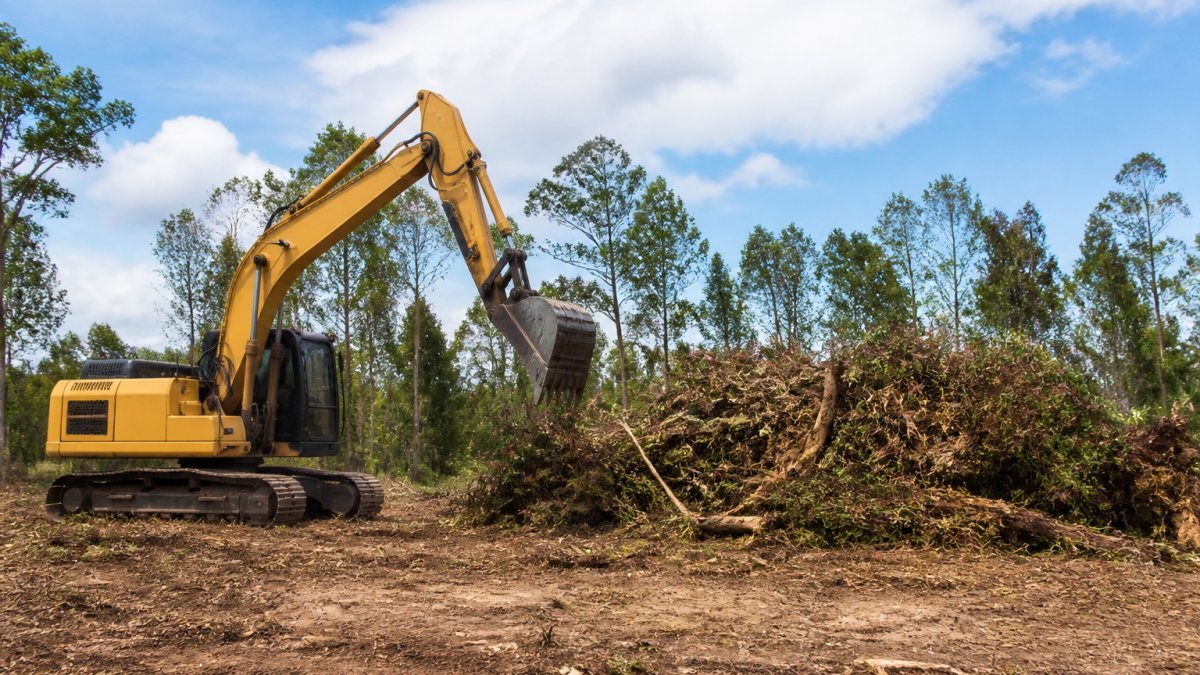
- Over 60 feet: frequently requires a crane or specialized climbing
Location, Access, and Nearby Structures That Raise Costs
Access is often the hidden price driver. If the crew cannot get a truck or chipper close to the tree, everything has to be carried or lowered by hand. That slows the job and raises labor costs.
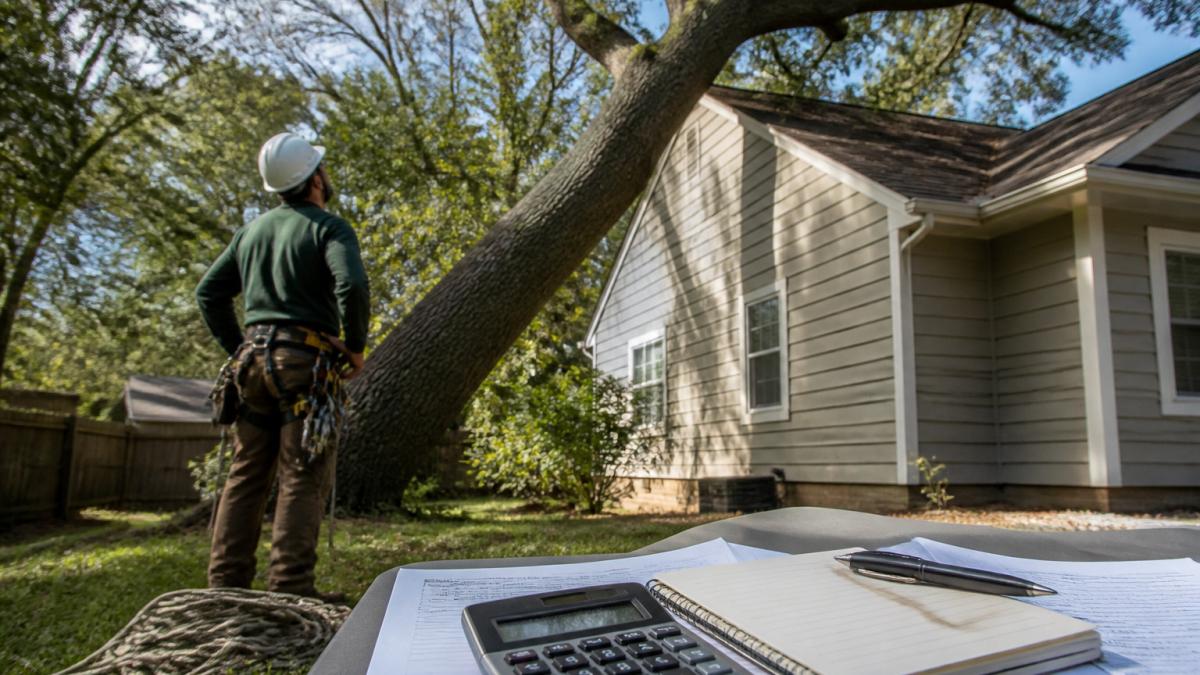
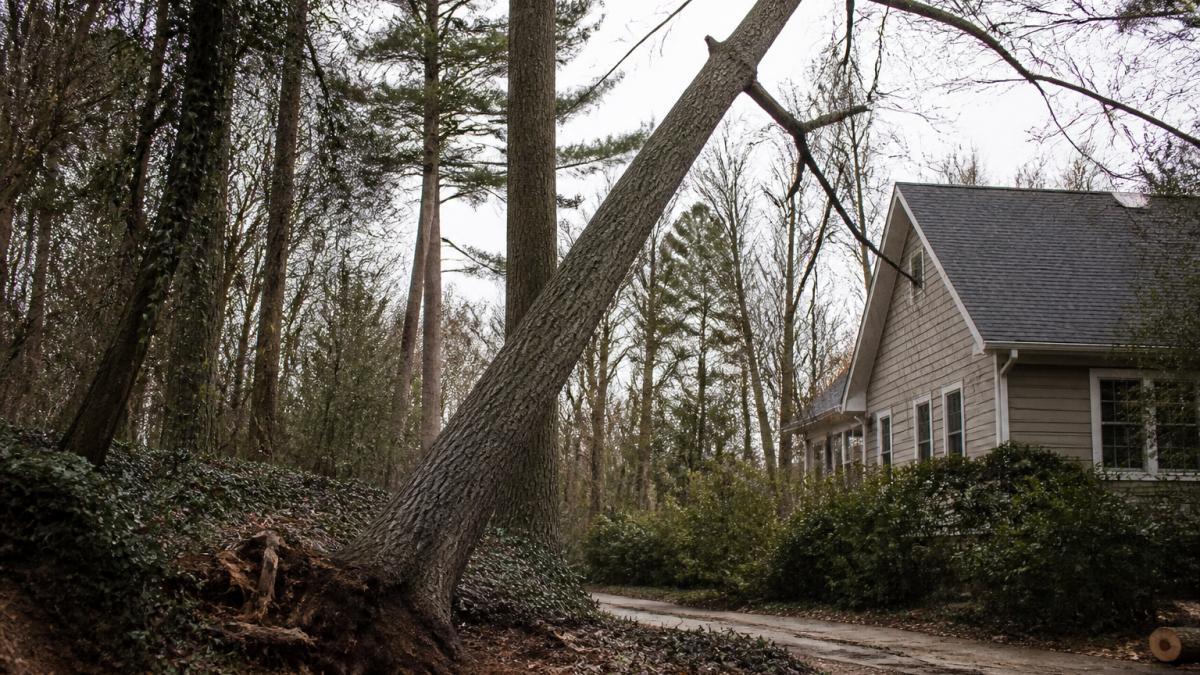
Nearby structures matter just as much. A tree close to a house, fence, power line, or pool needs controlled cuts and sometimes a crane to avoid damage. Power line work typically requires coordination with the utility company.
Plan ahead by clearing gates, moving vehicles, and marking any fences or sprinkler heads. These steps can save time on site, which lowers the bill.
Stump Removal, Debris Hauling, and Other Add-On Charges
Many quotes list the tree removal price and then add separate charges for everything else. Stump grinding is the most common add-on. A stump is usually ground several inches below the soil, and the cost depends on its size and how many stumps you have.
Debris hauling is another line item. Some companies leave the wood on site, while others haul it away. Ask whether the price includes chipping, hauling, and a broom cleanup of the work area.
- Stump grinding, often priced per stump or per diameter inch
- Wood chip removal or leaving chips on site
- Hauling away logs and brush
- Cleanup of lawns, driveways, and gutters
Does Homeowners Insurance Cover Tree Removal?
Whether homeowners insurance covers tree removal depends on the policy and the circumstances, so read yours or call your agent before work starts.
Keep records of the damage, photos, and the removal invoice. Many insurers ask for these documents to process a claim. Your state insurance department can also explain consumer rights; you can find it through the National Association of Insurance Commissioners at NAIC state insurance regulator directory.
How to Reduce the Cost of Tree Removal Without Cutting Corners
Most of the savings in tree removal come from changing the job, not from negotiating the hourly rate. Quotes generally reflect the work expected, so anything that shortens setup, reduces rigging, or combines trips can lower the total. The levers below are the ones that show up repeatedly in real estimates.
Bundle work into one visit. When several trees on the same property come down in a single visit, fixed trip and setup costs are spread across the job. Asking for a bundled price alongside a standalone price shows you the difference.
Time the work around demand. Tree services in most markets are busiest after storms and in late spring and summer, when hazardous limbs and overgrowth drive calls. Scheduling non-urgent removals in the slower season, or accepting a slot on a day the crew is already working nearby, can move a quote. Availability and crew routing vary, so a discount is not guaranteed, but it is a fair question to ask when the tree is not an emergency.
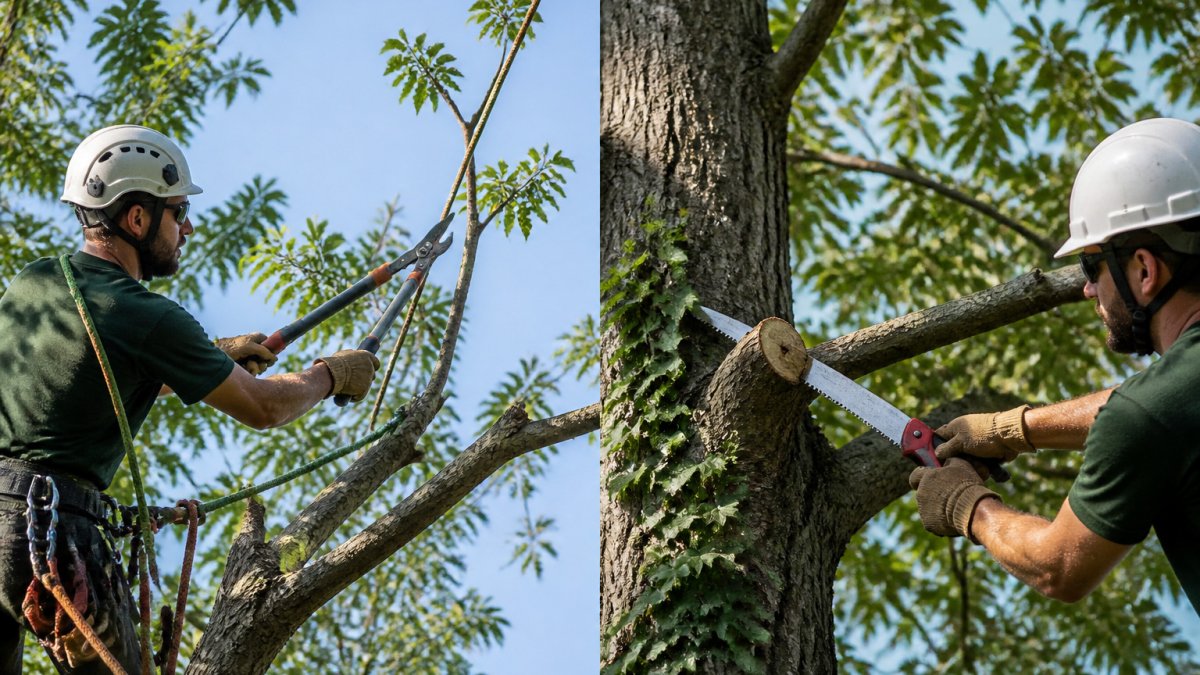
Reduce the scope you actually need. Full removal is not always required. If the tree is sound and the concern is a hazardous limb over a roof, a crown reduction or targeted pruning may address the risk at a fraction of the cost. A qualified arborist can assess whether a tree can be retained safely before you decide. Get that assessment in writing before you decide.
Make access easy before the crew arrives. Widen gates, move vehicles and patio furniture, trim back shrubs along the path, and mark sprinkler heads, septic lids, and invisible fence lines. Every minute a crew spends carrying brush by hand or waiting for a car to be moved is billable time. Clearing access is free for you and directly reduces labor hours.
Decide what happens to the wood and debris. Leaving cut logs on site for firewood or landscaping saves hauling and disposal charges. Asking whether brush can be chipped on site instead of hauled away can reduce the debris line. If you want everything gone, confirm that hauling and cleanup are in the written scope, a low bid that leaves the debris is not a lower price, it is a smaller job.
Keep the stump decision separate. Stump grinding is usually priced per stump or by diameter, and it is the most commonly omitted line. If the stump is in a spot where it does not matter, skipping grinding is a real saving. If you plan to replant or build over it, grinding is not optional, and bundling it with the removal is usually cheaper than a return trip.
Watch out: The cheapest bid is often cheap because it excludes cleanup, stump work, or insurance. Confirm that any contractor carries liability coverage and workers' comp before you compare totals.
Here is a checklist to use with any quote:
- Price includes removal, cleanup, and haul-away (or states clearly what is left behind)
- Stump work is listed separately with a clear price
- Company carries liability insurance and workers' comp, ask for certificates
- Permit or utility requirements are addressed in writing
- Work is described in writing with a start date and scope
- Bundled price and standalone price are both shown for multi-tree or add-on work
For safety rules that apply to tree work, the Occupational Safety and Health Administration publishes guidance at OSHA logging operations standard.
The levers below are the ones that show up repeatedly in real estimates, and each one can change the total without cutting corners.
| Lever | What it changes | Trade-off |
|---|---|---|
| Bundle work into one visit | Spreads fixed trip and setup costs | Compare bundled and standalone prices |
| Time work around demand | Non-urgent jobs may move a quote | Discount not guaranteed |
| Reduce scope | Crown reduction or pruning can cost less | Needs arborist assessment in writing |
| Clear access beforehand | Less hand-carrying and waiting | Every minute of crew time is billable |
| Decide on wood and debris | Leaving logs or chipping on site saves hauling | Confirm cleanup is in written scope |
| Keep stump decision separate | Skipping grinding saves when stump is out of the way | Grinding is needed before replanting or building |
Using a Tree Removal Cost Calculator and Comparing Quotes
Online calculators can help set a rough range, but they are not a substitute for a price. They typically take tree height, trunk diameter, and a rough access description and return a broad estimate. That is enough to sanity-check a bid, but it cannot see the lean over your garage, the fence gate the chipper will not fit through, or the power line the utility company has to de-energize. Use the calculator to prepare questions, then let the on-site estimate answer them.
When you enter numbers into a calculator, use measured height (not a guess from the ground) and trunk diameter at chest height. Note whether a truck can reach the tree, whether the tree is dead or leaning, and how close the nearest structure sits. Bring those same numbers to the in-person estimate so the arborist can confirm or correct them.
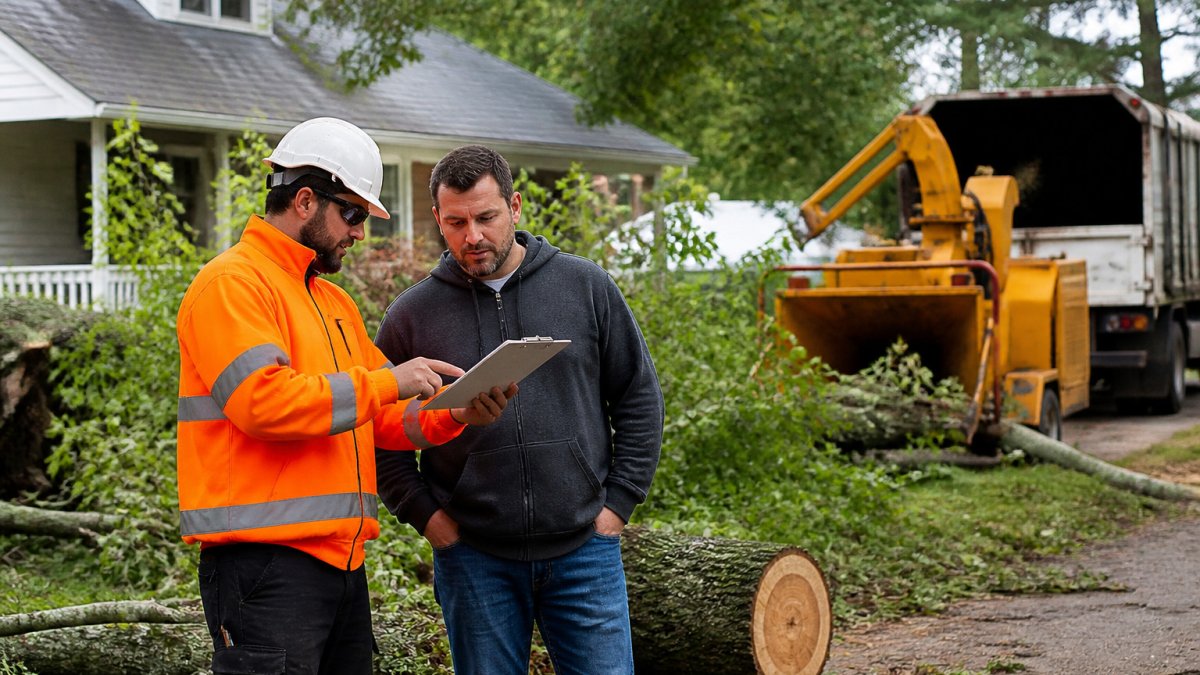
Compare quotes by scope, not by total. The most common mistake homeowners make is comparing the bottom line of two bids that describe different jobs. A quote that includes stump grinding, hauling, and cleanup is not comparable to one that removes the tree and leaves the debris. Normalize every bid against the same checklist before you decide.
Use this line-item comparison method for each quote:
- Tree(s) covered: species, height, trunk diameter, and count, confirm each bid lists the same trees.
- Removal method: climbing, bucket truck, or crane. Ask which method the price assumes and whether a crane surcharge is included or billed separately.
- Rigging and lowering: whether limbs are rigged down over structures or dropped in an open area.
- Stump work: grinding depth, number of stumps, and whether grindings are hauled or left.
- Debris: chipping, hauling, and whether the wood is left on site.
- Cleanup: broom cleanup of driveways, lawns, and gutters.
- Permits and utility coordination: who is responsible for any required permit and for coordinating with the utility on lines near the tree.
- Insurance and licensing: liability coverage and workers' comp, with certificates provided before work begins.
- Exclusions: what the quote explicitly does not cover, this is where low bids hide their savings.
- Payment and schedule: deposit, payment timing, start date, and weather contingencies.
A slightly higher bid that lists every line item is often a better value than a low bid with gaps in scope. If a quote is vague on stump work, debris, or permits, ask for it in writing before you sign.
Watch out: A quote that lists a total but no scope is not a quote you can compare. Ask each company to itemize the same categories so you are comparing identical work, and get any verbal promise, extra cleanup, a stump, a discount, added to the written estimate.
For consumer protection guidance on home improvement contracts, your state attorney general's office and the Federal Trade Commission publish resources at FTC consumer advice on home improvement.
Scheduling Your Tree Removal Job With Redbird Tree Service
Once you have a clear scope and a written quote, you are ready to book. Redbird Tree Service has over 25 years of field experience, and our certified arborists are fully certified and insured. We handle hazardous tree removal and land clearing, and the scope of each quote is confirmed in writing.
If a tree is leaning or damaged after a storm, tell us when you call. Redbird Tree Service provides 24/7 emergency tree services for urgent hazards. For a written estimate, contact Redbird Tree Service through our website to request a quote.
Frequently Asked Questions
How much does it cost to remove a 30-foot tree?
A 30-foot tree usually costs less to remove than a much taller specimen, but the final figure depends on trunk diameter, branch spread, health, and how close the tree sits to the house, fences, or power lines. Pricing varies by job, so Redbird Tree Service recommends requesting an on-site assessment and written quote for current pricing rather than relying on a general figure. Ask the contractor to itemize removal, stump handling, and cleanup so you can compare quotes accurately.
Does tree removal cost more when a tree is near a house or power lines?
Yes, proximity to structures and utility lines typically increases the price. Crews may need rigging, sectional removal, crane or bucket truck access, and extra time to protect roofs, fences, and landscaping. Power line work often requires coordination with the utility company, which can affect scheduling and cost. Confirm in writing how the quote accounts for these conditions before work begins.
Is stump removal included in a tree removal quote?
Not always. Some quotes cover felling and cutting the trunk to ground level only, while others include stump grinding or extraction as a separate line item. Ask whether the price includes stump grinding, how deep the grind goes, and whether roots or debris cleanup are covered. Clarifying this upfront prevents surprise charges after the crew leaves.
How can homeowners reduce the cost of tree removal?
Schedule work during the off-season when crews are less busy, bundle several trees into one visit, and ask for a clear scope so you pay only for what you need. Compare written quotes from certified, insured companies and confirm whether debris hauling is included. Where a tree can be made safe through pruning, a qualified arborist may recommend that option, which can cost less than full removal.
Redbird Tree Service has spent over 25 years helping property owners make safe, sound decisions about their trees. Contact us today for a clear, itemized estimate.