 comparison
How to Choose Between Tree Trimming and Tree Pruning
Last Updated: November 1, 2026
Quick Summary
Tree trimming vs tree pruning comes down to purpose: trimming is aimed at clearance and appearance, while pruning is aimed at tree health, risk reduction, and structure. Most real jobs involve both, so the right choice depends on what the tree needs right now.
- Trimming cuts back growth to control size, shape, and clearance from roofs, gutters, or power lines.
- Pruning removes dead, diseased, damaged, crossing, or rubbing branches to support tree health and structure.
- Cut at the branch collar so the tree can seal the wound; flush cuts and long stubs invite decay.
- Remove no more than about a quarter of the canopy in one season, and never top a tree to reduce height.
- Check for utility lines and local permit rules before any cutting, and leave work near power lines to professionals.
Table of Contents
- Tree Trimming vs Tree Pruning: The Core Difference
- How Cuts, Timing, and Tree Biology Differ
- When to Prune Trees: Timing by Species and Symptoms
- Tree Pruning Mistakes That Cause Lasting Damage
- Tree Pruning Tools and Tree Trimming Cost: What to Expect
- Booking Your Next Tree Assessment with Redbird Tree Service
- Frequently Asked Questions
Choosing between tree trimming vs tree pruning starts with knowing what each one is for. Homeowners often use the two terms interchangeably, but they describe different work with different goals.
According to Valley Tree's explanation of trimming versus pruning, trimming is generally aimed at clearance and appearance, while pruning is aimed at tree health, risk reduction, and structure. That split is a useful starting point, though real jobs often involve both.
Tree Trimming vs Tree Pruning: The Core Difference
The core difference comes down to purpose. Trimming shapes and clears. Pruning maintains the tree itself. A landscaper who wants a hedge-like profile or a clear path under a canopy is asking for trimming. A property owner who wants a sound tree with fewer weak points is asking for pruning.
What Tree Trimming Is Designed to Do
Trimming is cutting back growth to control size, shape, and clearance. Common goals include keeping branches away from a roofline, gutters, or power lines, or reining in a tree that has outgrown its space.
What Tree Pruning Is Designed to Do
Pruning is more targeted. It removes specific branches to support tree health and structural integrity. That includes dead, diseased, or damaged wood, and branches that cross or rub against each other.
Pruning also reduces risk. Weak limbs that could fail in a storm are a common reason to prune. This is why pruning matters most after storms and for mature trees near structures.
How Cuts, Timing, and Tree Biology Differ
The cuts themselves tell you a lot about the work. Trimming often uses shallow cuts that shorten growth to a desired length.
Tree biology also shapes timing. Many species should not be pruned heavily during periods of active sap flow or stress, and pruning removes leaves that feed the tree.
Over-pruning is one of the most common ways trees get harmed, so the goal is removing the right wood, not the most wood.
When to Prune Trees: Timing by Species and Symptoms
Timing is where trimming and pruning diverge most sharply. Trimming for clearance or shape can often be done across a wider window, but pruning that affects tree health and structure should follow the species, the season, and what the tree is telling you. The right window generally depends on flowering cycle, sap flow, disease pressure, and whether the wood is dead or alive.
Timing by species and season
- Deciduous shade trees (oak, maple, elm, sycamore): Structural pruning is typically done in late winter dormancy, when disease pressure and sap loss are lower. Avoid heavy pruning in spring flush or during drought stress.
- Flowering trees (dogwood, crape myrtle, cherry): Prune right after bloom. Cutting before bloom removes next year's flower buds; cutting in late summer can reduce cold hardiness.
- Evergreens and pines: These follow their own patterns and generally need less frequent cutting. Many pines are best pruned in late winter before new growth hardens; avoid heavy cutting during active candle growth.
Symptom-to-action decision guide
Use observable symptoms to decide whether you need deadwood removal, canopy shaping, or a professional assessment:
- Dead, cracked, or hollow limbs → Remove promptly; do not wait for the season.
- Branches rubbing or crossing → Prune one of the two to prevent wounding and decay.
- Lean, co-dominant stems, or cracks at unions → Professional assessment; these are structural risks that may need cabling or removal.
For a deeper look at which local species respond best to pruning, see our guide on Which Trees Benefit Most From Pruning In Kissimmee Fl.
Tree Pruning Mistakes That Cause Lasting Damage
Several common errors cause damage that lasts for years. Topping, which cuts the main leader back to stubs, creates weak regrowth that fails easily.
Homeowners also tend to delay pruning until a problem is severe, when a larger corrective cut is needed. Regular, moderate pruning is usually healthier than rare, heavy cuts.
If you notice signs of stress or damage from earlier cuts, a Tree Health Care Services assessment can identify the cause. For common questions about safe pruning and when to call a professional, our FAQ covers the basics.
Tree Pruning Tools and Tree Trimming Cost: What to Expect
Tools by job size
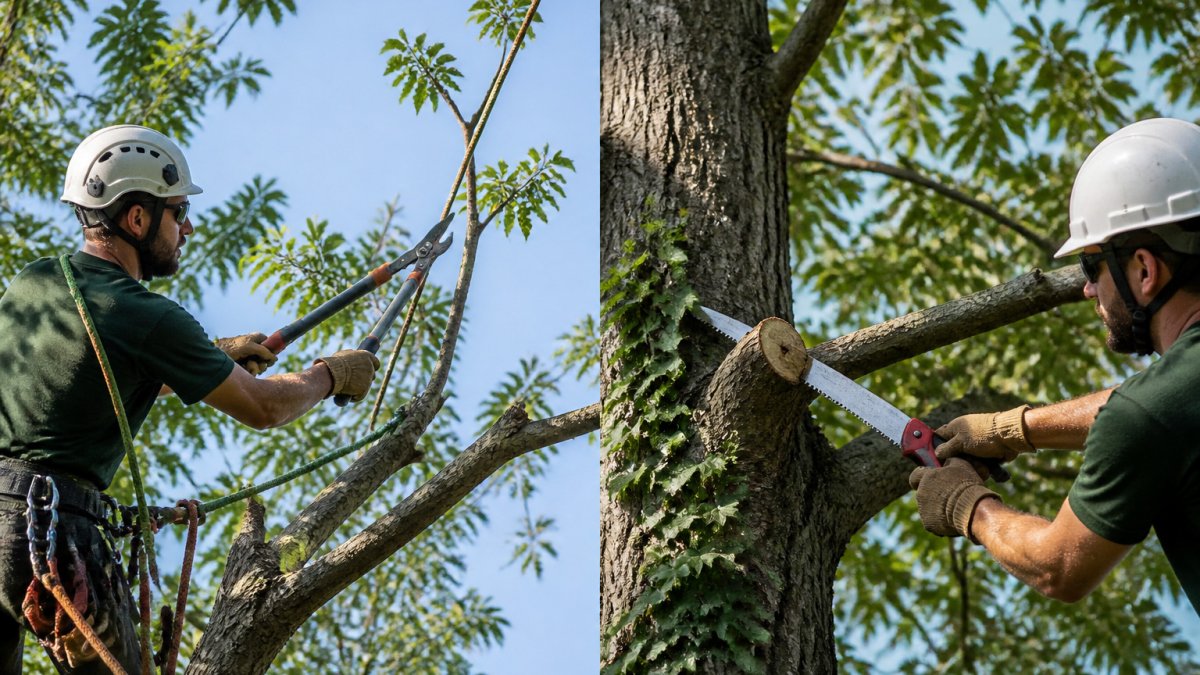
- Hand pruners and loppers: Best for small branches and light trimming; bypass pruners make cleaner cuts than anvil pruners.
- Pole saws: Useful for light clearance work at height, but not for structural cuts on large limbs.
- Pruning saws and chainsaws: For larger limbs; sharp chains and proper technique matter more than power.
Safety, permits, and utility lines
Tree work is among the most hazardous home maintenance tasks. Before any cutting:
- Check for utility lines. Never work within the clearance zone around power lines. Contact the utility before any work near lines; only qualified line-clearance professionals should work in that zone.
- Check local rules. Many municipalities require permits for removing or heavily pruning protected or heritage trees, and some have canopy-preservation ordinances. Confirm before cutting.
- Wear protective gear. Eye protection, hearing protection, gloves, and a hard hat are baseline; chainsaw chaps and fall protection are needed for elevated work.
- Avoid working alone at height. A common pattern is to attempt ladder work that should be rigged or left to a professional.
What drives cost
Cost depends on tree size, access, the amount of wood removed, debris hauling, and whether the job is trimming or structural pruning. Expect higher costs for:
- Large or hazardous trees
- Tight access or obstacles near the work zone
- Rigging and controlled lowering of limbs
- Stump grinding or debris hauling
Pricing depends on the specifics of your property, so request a site-specific quote through Redbird Tree Service's website for current prices.
Aftercare and signs of a poor job
After pruning, monitor the tree for:
- Excessive sap or bleeding
- Sunscald on suddenly exposed bark
- Suckers or water sprouts at cut sites
- Dieback at branch tips
Signs of over-pruning include a thin canopy, lion-tailing (stripping interior growth), and stubbed limbs. If you see these, have a certified arborist assess the tree before doing more work.
Costs and safety requirements vary with the job, and the article lists the main factors that drive price.
| Cost factor | Effect on price | Note |
|---|---|---|
| Tree size | Larger trees cost more | Size is listed as a key driver |
| Access | Tight access raises cost | Obstacles near the work zone matter |
| Limb removal | Rigging adds cost | Controlled lowering of limbs |
| Debris hauling | Adds to total | Stump grinding also adds cost |
| Emergency work | Higher cost | Storm-damaged work is listed separately |
Booking Your Next Tree Assessment with Redbird Tree Service
Deciding between trimming and pruning is easier with a professional look at the tree. At Redbird Tree Service, our certified arborists are fully certified and insured, and our team offers 24/7 emergency tree services for storm-damaged or hazardous trees.
If you are weighing whether your tree needs trimming, pruning, or both, book a Tree Pruning Services assessment or explore Tree Trimming Services to see which fits your property. Contact us for a site visit and an honest recommendation.
Frequently Asked Questions
Is it okay to trim a tree?
Yes, trimming is generally acceptable when it is done for clearance, appearance, or to remove minor growth that interferes with a structure or walkway. The risk comes from how much is removed and when. Cutting more than about a quarter of a tree's live canopy in one season can stress it, and heavy cuts made during the wrong time of year invite disease and decay. Look for trimming that keeps the natural shape and avoids topping, which leaves weak regrowth. A certified arborist can tell you how much cutting a specific tree can tolerate.
What are the common mistakes when pruning?
The most common mistakes are topping, removing too much live foliage, and cutting flush against the trunk instead of just outside the branch collar. Topping produces fast, weak sprouts that break easily. Flush cuts damage the tree's natural wound response and open entry points for decay. Pruning at the wrong season, such as cutting oaks during spring when oak wilt risk is higher, also causes problems. Using dull or improper tools adds to the damage by tearing bark instead of making clean cuts.
What is the difference between tree trimming and tree pruning?
Trimming usually focuses on appearance, size, and clearance, such as shortening overgrowth or keeping branches away from a roof or power line. Pruning focuses on tree health and structure, including removing dead, diseased, or damaged branches and thinning crowded growth so the canopy stays strong. In practice, a single service often includes both, but the goal behind each cut should be clear. Asking your arborist what each cut is meant to achieve is a good way to confirm the work supports the tree's long-term health.
Should I hire an arborist to trim or prune a tree?
For large trees, trees near structures or power lines, or any work requiring climbing or aerial lifts, hiring a certified arborist is the safer choice. Look for a credential such as ISA Certified Arborist and confirm the company carries general liability and workers' compensation insurance before work begins. Ask for a written scope that explains which cuts are recommended and why. A reputable arborist should explain the reasons for each removal rather than recommending work without justification, which helps you avoid unnecessary removals.